
 PCR Laboratory
BB-45890863
Fluorescent Quantitative PCR Detection System LEIA-X4 LEIA-X6
Introducton: Real-time PCR is used for sensitive, specific detection and quantification of nucleic acid targets. We have developed powerful assay design algorithms, optimized qPCR regent, intuitive data analysis software, and flexible instrumentation to help harness the power of qPCR across a rich and diverse set of applications. Explore our robust solutions for your qPCR-based research.
Specifications
- Sample Capacity96*0.1ml PCR plate, 12*8-strip tubes, 96*0.1ml single tube (Transparent Cover)
- Reaction System5~50μl
- Dynamics Range1~10 10 copies
- Emission LightLED
- DetectorPD
- Fluorescence Detection RepeatabilityCV≤3%
- Fluorescence Detection AccuracyCV≤5%
- Fluorescence Detection Linearityr≥0.995
- Module Temp. Range4~105℃
- Ramp Rate7.0℃/s(max)
- Temp. Accuracy±0.5℃
- Temp. Uniformity≤±1℃
- Temp. Control ModeBlock and tube
- Gradient Temp. RangeIt can be set within the temperature range of 30°C to 105°C, with a temperature gradient span of 1°C to 36°C
- Hot-Lid Temp. Range100℃, automatic hot-lid
- Scanning ModeTop scanning
- Operation ModeContinuous
- Scanning Time8.5s
- Special FunctionAbsolute quantitative automatic analysis, relative quantification, SNP Analysis, melting curve analysis, etc.
- Operation SystemMicrosoft: Windows 10
- Port MethodUSB Port
- Power SupplyAC100~240V, 50/60Hz
- Dimension(W*D*H)375*505*375mm
- Net Weight28kg
- Packing Size(W*D*H)645*565*605mm
- Gross Weight49kg
Details
Application: It can be widely used in infectious disease research, food pathogen detection, waterborne pathogen detection, drug analysis, stem cell research, pharmacogenomics research, tumor and genetic disease research, plant science and agricultural biotechnology. Working Principle: The temperature step change is controlled by the semiconductor Peltier to realize PCR amplification. Use high-sensitivity PD unit to detect fluorescence; Program control channel switching, non-contact excitation/detection on the top structure, coordinated with motor control X and Y axis movement to achieve 96-hole scanning. Finally, accurate analysis is carried out through powerful software. Features: 1. Excellent temperature control performance of the instrument, Module Max heating rate heating rate 7.0℃/s. 2. No edge effect, no optical path correction, top excitation/detection, non-contact measurement. 3. Fluorescence detection adopts PD sensor with high sensitivity. 4. Long-life LED light source, stable emission wavelength, maintenance-free. 5. 4/6-channel fluorescence detection, no cross interference between channels. 6. User-friendly and fully functional software, flexible program setting, comprehensive analysis and reporting functions, all the parameters can be stored. Real-time PCR Hardware: Thermoelectric cooling module (TEM) is a semiconductor device composed of many tiny and effective heat pumps. By applying a low-voltage DC power supply, heat will be transferred from one side of the TEM to the other side, resulting in a phenomenon that one side of the TEM becomes hot and the other side becomes cold. Since this phenomenon is completely reversible, when the polarity of the DC power supply is changed, it will be the opposite. This product adopts a long-life series TEM, which provides longer life and more efficiency during thermal cycling. The integrated design of the scanning module and the heating cover module, relying on its own gravity to compress the heating plate and the reagent cover, and is supported by four compression springs to prevent the sample tube from being crushed by four; at the same time, the rubber pad around the heating cover is pressed to ensure that there is no external light source interference in the detection ; The bottom of the cam mechanism is used to support the space to ensure the smooth sliding of the heating module; the guide rail mechanism on both sides of the heating module prevents the module from shifting and ensures the accuracy of the mechanical scanning structure. The software includes functions such as absolute quantification experiment, melting curve experiment, relative quantification (AACT) experiment, and genotyping experiment. Enter the attribute setting interface and select different function modules. Guided flow operation, convenient for users to quickly complete experimental settings. The software can open the recent experiment record template for easy viewing and the creation of new experiments. Technical Parameters: Model LEIA-X4 LEIA-X6 Sample Capacity 96*0.1ml PCR plate, 12*8-strip tubes, 96*0.1ml single tube (Transparent Cover) Reaction System 5~50μl Dynamics Range 1~10 10 copies Channel 4 6 Emission Light LED Detector PD Detection Path F1: FAM/SYBR GREEN; F2: VIC/JOE/HEX/TET; F3: ROX/TEXAS-RED; F4: Cy5 F1: FAM/SYBR GREEN; F2: VIC/JOE/HEX/TET; F3:CY3; F4: ROX/TEXAS RED; F5: CY5; F6: CY5.5 Excitation Wavelength 455~650nm 455~685nm Detection Wavelength 510~710nm 510~740nm Fluorescence Detection Repeatability CV≤3% Fluorescence Detection Accuracy CV≤5% Fluorescence Detection Linearity r≥0.995 Module Temp. Range 4~105℃ Ramp Rate 7.0℃/s(max) Temp. Accuracy ±0.5℃ Temp. Uniformity ≤±1℃ Temp. Control Mode Block and tube Gradient Temp. Range It can be set within the temperature range of 30°C to 105°C, with a temperature gradient span of 1°C to 36°C Hot-Lid Temp. Range 100℃, automatic hot-lid Scanning Mode Top scanning Operation Mode Continuous Scanning Time 8.5s Special Function Absolute quantitative automatic analysis, relative quantification, SNP Analysis, melting curve analysis, etc. Operation System Microsoft: Windows 10 Port Method USB Port Power Supply AC100~240V, 50/60Hz Dimension(W*D*H) 375*505*375mm Net Weight 28kg Packing Size(W*D*H) 645*565*605mm Gross Weight 49kg
You may also like
PCR Laboratory
 PCR Laboratory View product
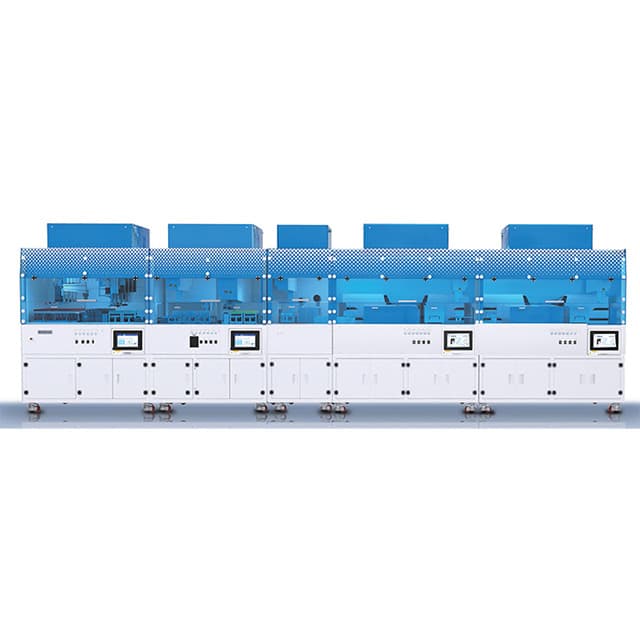
High-throughput Nucleic Acid Detection Workstation
 PCR Laboratory View product
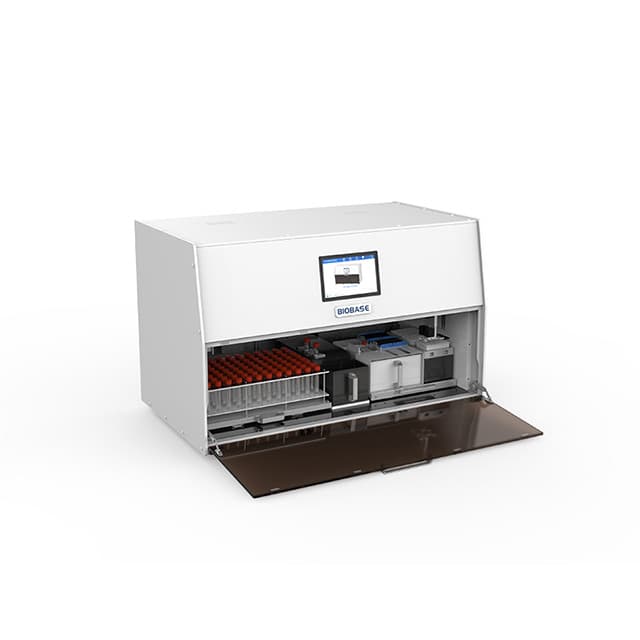
Automated Sample Processing System BK-PR96
Introduction: The BK-PR96 automated sample processing system is suitable for a variety of screw-cap sampling tubes, and can be loaded with the original tube with the cap. It has functions such as automatic opening and closing of the cap, sample handling, and addition of proteinase K/internal standard. 96 samples can be completed within short time, helping laboratories to quickly improve their large-scale nucleic acid testing capabilities.
 PCR Laboratory View product
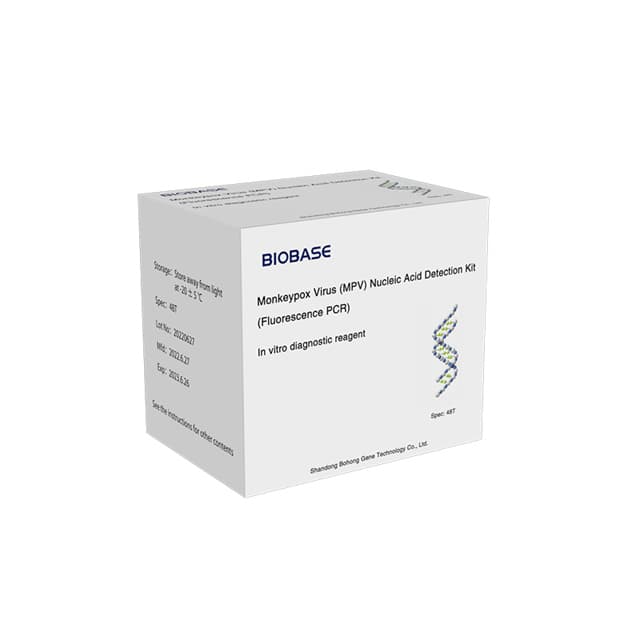
Monkeypox Virus(MPV) Nucleic Acid Detection Kit(PCR-Fluorescence Probe Method)
Introduction: Monkeypox is a zoonotic disease caused by the monkeypox virus, which can be transmitted from animals to humans as well as from human to human. Monkeypox symptoms often include fever, severe headache, muscle aches, swollen lymph nodes, skin lesions, and more. According to the World Health Organization, more than 50 countries and regions around the world have reported confirmed cases of monkeypox. There is currently no cure for monkeypox, and the World Health Organization urges countries to strengthen surveillance and testing of the infectious disease. This product is based on real-time fluorescent PCR technology, selects the highly conserved region of the monkeypox virus gene coding region as the target region, designs specific primers and fluorescent probes for PCR amplification, and performs PCR amplification on patient serum and lesion leaching fluid (vesicular fluid, pustule fluid) Qualitative detection of monkeypox virus DNA in It is suitable for auxiliary diagnosis of related diseases caused by monkeypox virus infection.
 PCR Laboratory View product
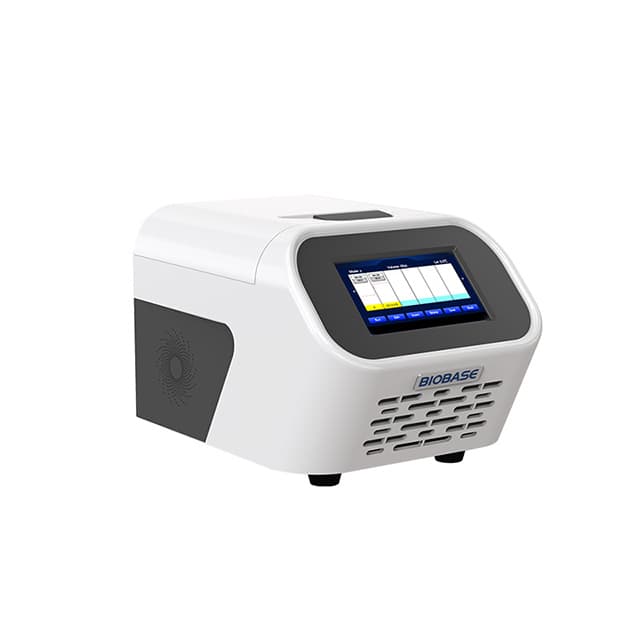
Gene Amplification Instrument
Introduction: The gene amplification instrument is an instrument that performs nucleic acid amplfication by polymerase chain reaction. Mainly used in Medical institutions, clinical gene amplification testing laboratories that meet the requirements, scientific research institutes, universities, etc.